


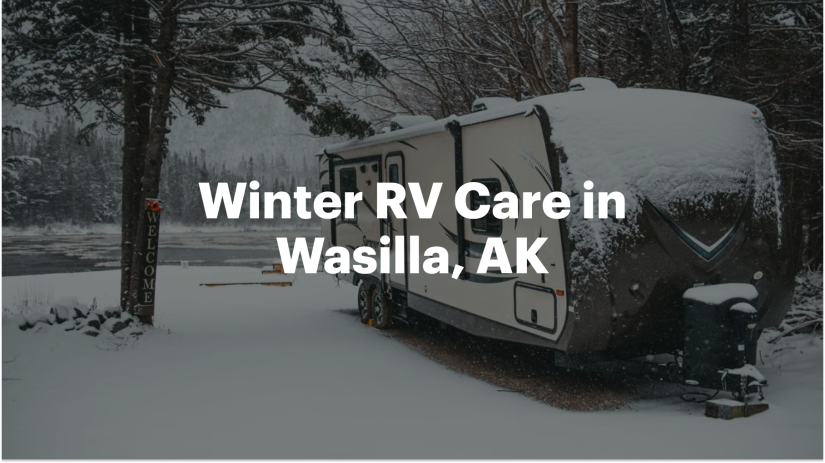


Winter RV Care in Wasilla, AK
The antifreeze is in the lines, the tanks are drained, and the rig is parked for the season. Good. That's the hard part done, but it isn't the whole job.
Winter RV care in Wasilla, AK comes down to a handful of quick check-ins that catch small problems before they turn into spring repairs. Here's what's worth your time between the last fall trip and the first one after break-up.
How Often to Check on a Parked RV
Every two to three weeks is a solid rhythm. Add an extra visit after any big snowfall, a hard wind, or a warm spell that melts things and then refreezes them.
Each visit doesn't need to be long. Walk the whole rig, look at the roof line, check the tires, peek inside for anything out of place, and go home.
If your RV is parked across town or you're out on the slope, a neighbor you trust can cover a visit or two. Trade them a favor and call it even.
Clearing Snow Off the Roof and Slide-Outs
A foot of fresh powder isn't much of a worry. Wet, heavy snow that sits and then freezes is where trouble starts, especially on flat or lightly pitched RV roofs.
Snow on an RV roof can stress the roof, sag around vents, and work moisture into seams. Clear it before it turns to a solid slab.
- Use a roof rake with a soft head or a foam snow broom. Metal shovels gouge rubber and seals.
- Pull from the side and work from the ground when you can. Climbing onto an icy roof is how people end up in the ER.
- Never chip at ice. If it's bonded to the roof, wait for a warmer day and let it loosen.
- Keep slide-outs retracted all winter if you can. If one is out, clear the top before it moves an inch, because piled snow can tear the topper or bind the seals.
Pay attention to the edges and around awnings, too. That's where drifts pack in and ice builds up first.
Keeping the RV Battery Alive in Cold Weather
Cold is hard on batteries. An RV battery in cold weather loses capacity fast, and a battery that's discharged can freeze and crack, which ends its career.
You've got a few good options.
- Pull the batteries and keep them somewhere above freezing and charge them once a month.
- If they stay in the rig, switch off the battery disconnect so nothing slowly drains them.
- A small solar maintainer can keep a trickle going through the short days. Check that it's working on each visit.
- Check the state of charge with a basic multimeter. If it's dropping, charge it before it gets low.
Don't count on power at the parking spot. Plan on the battery being on its own, and you won't get surprised.
Tires and Leveling on Frozen Ground
Frozen ground shifts and heaves, and gravel lots soften and firm up again as temperatures swing. Your RV feels all of it.
Park it on level ground with the tires on boards or rubber pads. That keeps rubber off frozen dirt and helps the tires hold their shape. Chock the wheels, and go easy on the parking brake. A brake that freezes in place is a miserable thing to deal with in March.
Skip leaving the leveling jacks down all winter. Ground movement can load them in odd ways. Retract them and use blocks or pads instead, and check that the rig is still sitting even when you visit.
Check tire pressure when you stop by. Cold drops it, and you'll want to know before spring rather than at the first gas stop.
Mice and Moisture
Mice don't care how cold it is. A parked RV is a dry, sheltered place with plenty of wiring and insulation to chew on.
Walk the underside and look for gaps around pipes, cables, and vents. Stuff steel wool in the openings, since mice don't like chewing through it. Set traps inside and out, and don't leave food, soap, or paper goods in cabinets.
Moisture is the quieter problem. Condensation builds in a closed-up rig, and it shows up later as musty smells, soft spots, or mold.
- Set a few moisture absorbers inside and swap them out as they fill.
- Prop interior doors and cabinets open for airflow.
- Open a roof vent a crack if it has a cover that keeps snow out.
- Look under mattresses and in corners for damp spots each visit.
While you're at it, think about the gear that rides along with the RV. Camp chairs, bedding, and cookware do better out of the rig. Our guide to the best camping gear to store in self-storage covers what's worth pulling out, and the list of items that do well in the Alaskan cold helps sort the rest. A drive-up storage unit keeps that gear within easy reach.
After a Thaw or a Windstorm
Mat-Su winters rarely stay in one mood. A warm spell that melts the top layer and refreezes overnight can do more damage than steady cold.
After a thaw, check the roof for ice dams and standing water. Look at the ground around the tires too. Pooled meltwater that refreezes can lock the wheels in place.
After a windstorm, walk the whole rig. Check that awnings are still tied down, vent covers are in place, and any tarp or cover hasn't shifted or torn. Loose covers rub against the finish, and flapping fabric can pull a seam open.
Take photos each time something looks off. They help if you need to file a claim later.
Where You Park Matters
Plenty of Mat-Su folks leave their rigs outside, and that works fine with regular attention. If you don't have room at home, here's how RV storage options in Wasilla stack up. Outdoor RV storage in Alaska is common, and the right lot makes winter checks simpler.
Alaska EZ Storage at 1350 E Bogard Rd near N Peck St has outdoor parking spaces up to 12x35, gravel drive aisles, and access around the clock. That last part matters when you want to swing by after a storm without waiting on business hours.
Spring Wake-Up Checklist for Break-Up Season
When the snow goes soft and the lots turn to mud, you're getting close. Don't rush to hook up and go. Spend an afternoon on these first.
- Look it over outside. Check the roof, sidewalls, and underside for damage, nests, or water stains.
- Check the seals. Press along the roof sealant, window gaskets, and slide-out seals. Cracks, gaps, or sticky spots need attention before the first rain.
- Bring the batteries back. Reinstall them fully charged and check the connections.
- De-winterize the water system. Turn the water heater bypass back to normal and make sure the drain plugs are closed. Then hook up fresh water and run each faucet until the antifreeze is gone.
- Flush and sanitize. Run clean water through the lines until it runs clear. Sanitize the system and flush again. Don't skip checking for leaks while the pump is running.
- Test the propane. Check the lines, the regulator, and the appliances. Replace the batteries in your smoke and CO detectors.
- Set tire pressure. Inflate to spec and look closely at the sidewalls for cracks.
- Do a test run. Start the engine or tow rig, and check lights, brakes, and the fridge before you load up.
Break-up is messy, but it's short. Get the rig ready now and you'll be on the road when the first good weekend shows up.
Look after it through winter, and it'll be ready when you are.

